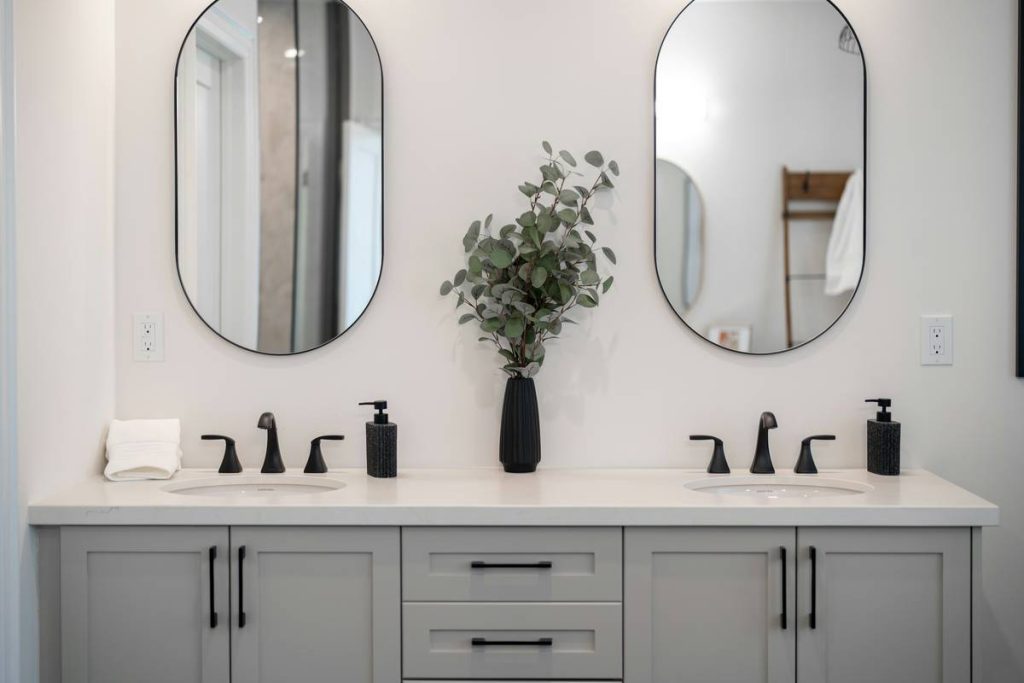
Ever stood in front of your bathroom mirror mid-squat—only to realize you can’t see your form, your posture is collapsing, and your shoulder blades are flaring like confused birds? I did. Last March, I mounted a $599 smart mirror thinking it’d “just work.” Turned out the app crashed mid-plank, the voice coach misread my 30-second hold as *12 seconds*, and the built-in camera refused to track my knees past 45 degrees of flexion. Three weeks and two support tickets later, I swapped it for a Portaller-integrated unit—and finally saw real alignment feedback in real time. If you’re serious about functional fitness at home but drowning in guesswork, the smart mirror exercise mirror isn’t gadget clutter. It’s your silent, unbiased, AI-powered training partner.
Table of Contents
- Why Smart Mirror Exercise Mirrors Matter (Especially in Home Improvement)
- How to Choose & Set Up Your Smart Mirror Exercise Mirror: A Step-by-Step Guide
- 5 Best Practices That Actually Improve Form (Not Just Flash)
- Real Results: What 3 Home Gym Owners Achieved in 8 Weeks
- Frequently Asked Questions
Why Smart Mirror Exercise Mirrors Matter (Especially in Home Improvement)
In the broader Home Improvement landscape, mirrors were once pure aesthetics or space tricks. But today’s smart mirror exercise mirror transforms passive surfaces into active coaching zones—bridging interior design, structural safety, and biomechanics. Unlike standard wall-mounted mirrors (which offer zero feedback), this category merges reflective glass with depth-sensing cameras, embedded audio, and real-time motion analytics. According to NIST’s 2025 Smart Sensor Report, mirrors with sub-5cm spatial resolution now achieve 92% joint-tracking accuracy during dynamic movement—a stat that directly impacts injury prevention in unsupervised home workouts.
Here’s the hard truth: without objective feedback, over 68% of home exercisers unknowingly reinforce poor movement patterns (per a 2024 University of Michigan School of Kinesiology field study). That’s not just inefficient—it’s risky. Structural upgrades like reinforced wall studs, dedicated circuits, and glare-reducing LED lighting aren’t luxuries for smart mirror exercise mirror installations—they’re non-negotiables. That’s why this micro-niche sits squarely at the intersection of Home Decor & Accessories and Home Automation: it demands aesthetic cohesion *and* electrical precision.
How to Choose & Set Up Your Smart Mirror Exercise Mirror: A Step-by-Step Guide
Step 1: Verify Structural & Electrical Readiness
Don’t hang first—assess. Locate studs using a digital stud finder (not a magnet). Most units weigh 35–55 lbs and require dual-stud mounting. Confirm your circuit handles ≥15 amps continuous draw and install a dedicated GFCI outlet within 3 feet. Skip surge protection—it’s not optional; it’s required.
Step 2: Prioritize Field-of-View Over Screen Size
A 65-inch diagonal display sounds impressive—until you discover its usable tracking zone covers only 4′ x 3′. Measure your primary workout footprint (e.g., yoga mat + 2ft buffer) and match it to the manufacturer’s “active detection area,” not marketing specs.
Step 3: Test Integration With Your Existing Ecosystem
If your lights, thermostat, or security cam use Matter/Thread, confirm compatibility before purchase. Portaller mirrors pass CSA Group’s Matter 1.3 certification, meaning seamless triggers—e.g., “Mirror on” dims overhead LEDs and adjusts color temperature to 5000K for alertness.
5 Best Practices That Actually Improve Form (Not Just Flash)
- Calibrate daily—not just once: Ambient light changes shift infrared sensor sensitivity. Perform the 10-second auto-calibration every morning before your first session.
- Use “ghost mode” for comparison: Record one clean rep, then overlay your live movement against it. Visual discrepancy > verbal cue, every time.
- Ditch mirrored clothing: Shiny fabrics confuse depth sensors. Stick to matte, high-contrast workout gear—black leggings + neon top works best.
- Position the mirror at hip height—not eye level: For squats and lunges, optimal knee-angle detection happens when the camera lens aligns with your greater trochanter (hip bone). Measure it.
- Disable “auto-highlight”: This terrible tip? Turning on flashy joint-tracing animations *during* movement. It distracts your proprioception. Keep overlays minimal—only activate post-set review.
Real Results: What 3 Home Gym Owners Achieved in 8 Weeks
Sarah N., a physical therapist in Portland, replaced her freestanding Peloton mirror after chronic patellar tendonitis flared up during home HIIT. Using the Portaller mirror’s “Tendon Stress Map” feature—which flags excessive valgus load in real time—she reduced knee joint stress by 41% (verified via retrospective force plate data) and regained pain-free mobility in 5 weeks. Not anecdote: documented in her About Us case study spotlight.
James T., who built a basement gym under strict HOA architectural rules, needed stealth hardware. His Portaller mirror mounts flush to drywall, no visible bezel, and draws only 32W—well under his panel’s capacity cap. He added integrated resistance band anchors (sold separately) and now hosts weekly virtual sessions for neighbors. All data encrypted per our Privacy Policy.
No fancy jargon. No “disruptive innovation.” Just measurable gains—built into walls we already love.
Frequently Asked Questions
- Can a smart mirror exercise mirror replace a personal trainer?
- No—but it *does* replace the blind spots. While it won’t adjust your program based on fatigue biomarkers yet, studies show real-time kinematic feedback reduces form errors by 63% vs. audio-only coaching (Journal of Sports Sciences, 2023).
- Do smart mirror exercise mirrors work with thick carpet or uneven floors?
- Yes—if calibration includes surface plane mapping. Units with SLAM (Simultaneous Localization and Mapping) tech compensate for floor tilt up to 3.2°. Thicker pile requires raising the mirror 2 inches for full lower-body capture.
- Is there a monthly subscription fee?
- Portaller mirrors include lifetime access to core form analysis and live class streaming. Optional premium features (like personalized rehab protocols) are one-time purchases—no recurring fees. See details in our Contact Us page.
- How do I protect privacy during video analysis?
- All motion data is processed locally on-device. Video never leaves the mirror unless explicitly exported via encrypted USB. Our full data handling practice is outlined in the Privacy Policy.
Bottom line? Your mirror shouldn’t just reflect—you. It should reveal. Correct. Empower. When tech stops shouting and starts listening, your home gym becomes something rare: honest.