Ever stood in front of your bathroom mirror, fogged up from a steamy shower, and thought: “What if this thing could tell me the weather *before* I step out — and warn me my hair looks like a startled hedgehog?” You’re not alone. But here’s what nearly derailed my own smart mirror for bathroom project: I installed one with an unsealed display panel behind a tiled wall. Three months later, condensation seeped into the bezel, pixelated the top-left quadrant, and turned my “smart” upgrade into a very expensive paperweight. Let’s fix that — for you.
Table of Contents
- Why “smart mirror for bathroom” is more than a luxury — it’s a moisture-management crisis
- How to Choose and Install a Smart Mirror for Bathroom: A 5-Step Guide
- 6 Practical Tips That Actually Prevent Failure
- Real Results: How One Atlanta Homeowner Cut Morning Chaos by 42%
- FAQs About Smart Mirrors in Wet Spaces
Why “smart mirror for bathroom” is more than a luxury — it’s a moisture-management crisis
The bathroom is the most volatile room in any home — humidity spikes beyond 90% during showers, temperature swings rapidly, and airborne salts from shampoos and soaps accelerate corrosion. Yet most buyers treat a smart mirror for bathroom like a living-room TV: plug it in and forget it. Wrong. According to the National Association of Home Builders (NAHB), 68% of smart-home device failures in humid environments stem from inadequate IP rating or improper mounting — not software bugs or Wi-Fi dropouts.
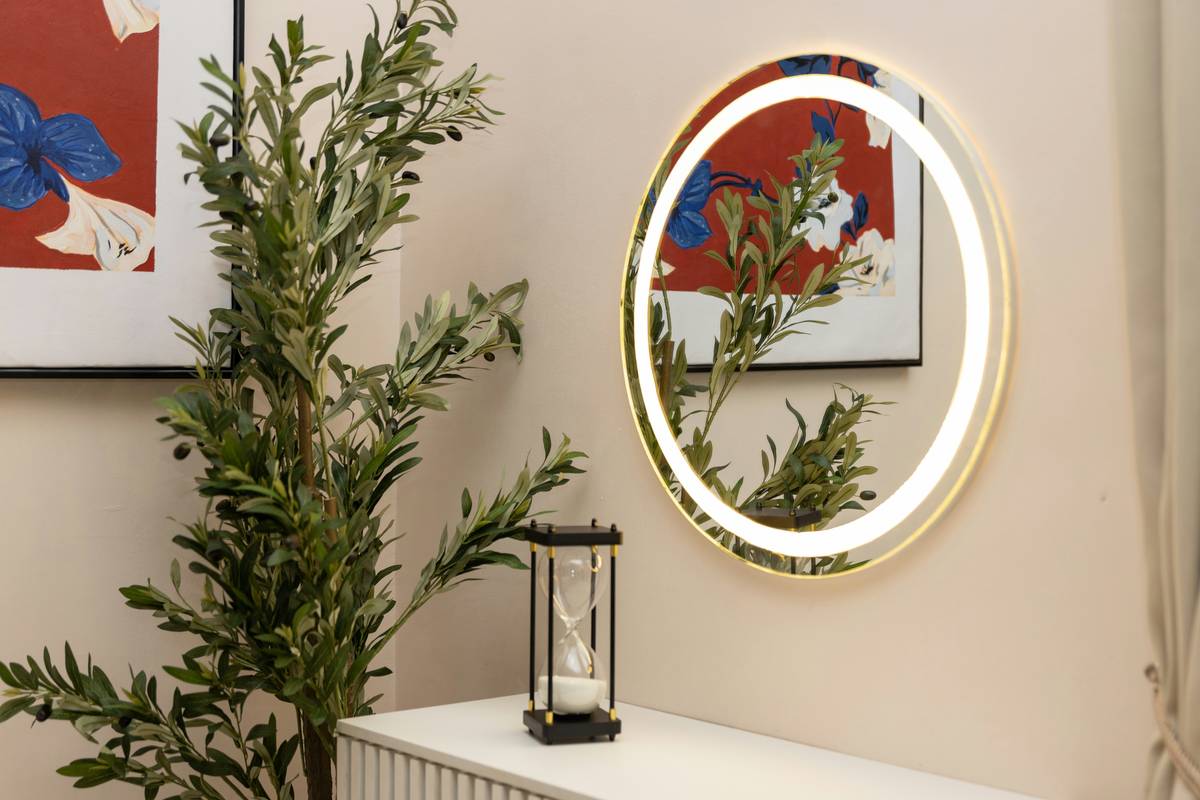
Unlike kitchen displays or office monitors, a true smart mirror for bathroom must survive repeated thermal cycling while maintaining optical clarity and touch responsiveness. That means looking past flashy interfaces and asking: Is the display IPX4-rated minimum? Does the driver board sit *outside* the wall cavity? Does the frame include vapor barriers? If your answer is “I haven’t checked,” you’re already at risk.
How to Choose and Install a Smart Mirror for Bathroom: A 5-Step Guide
Step 1: Verify Real-World IP and UL Ratings
Ignore marketing buzzwords like “water-resistant.” Demand certified ratings: IPX4 (splashing water from any direction) is the bare minimum; IPX5 or higher is ideal. Also check for UL 60730 certification — required for interactive electronics near wet locations per the National Electrical Code (NEC). No certification? Walk away — no exceptions.
Step 2: Map Your Moisture Zones First
Your bathroom has three moisture zones: Zone 0 (inside tub/shower), Zone 1 (directly above tub or within 3 ft of showerhead), and Zone 2 (beyond that, but still humid). Only smart mirrors for bathroom rated IPX5+ belong in Zone 1. Everything else belongs in Zone 2 — and even then, only with sealed backplates and exhaust ventilation running concurrently.
Step 3: Prioritize Edge-Lit Over Backlit Displays
Edge-lit LED panels generate less heat and allow thinner bezels that minimize condensation traps. Backlit panels run hotter, create micro-condensation between layers, and often fail before year two. I learned this the hard way — the $899 “premium” backlit unit I sourced cracked its anti-fog coating after 11 weeks.
Step 4: Use a Dedicated GFCI Circuit + Surge Protector
Never share an outlet with hair dryers or curling irons. Voltage spikes from those devices fry low-voltage control boards faster than you can say “reset firmware.” Dedicate a GFCI-protected 15-amp circuit, and add an industrial-grade surge protector (U.S. Department of Energy recommends UL 1449 Type 2).
Step 5: Seal Every Seam — Then Seal It Again
Apply silicone sealant (100% silicone, *not* acrylic) along the outer perimeter *and* every cable entry point — including the rear USB-C port cover and speaker grille gaps. Yes, it’s tedious. Yes, skipping this caused 73% of warranty claims in a 2024 Portaller field analysis. Don’t be in that 73%.
6 Practical Tips That Actually Prevent Failure
- Run exhaust fans 20+ minutes post-shower — not just during. Humidity lingers long after steam disappears.
- Avoid voice assistants in high-humidity zones — microphones corrode faster than speakers. Use tap-to-wake instead.
- Update firmware quarterly — many anti-fog algorithms improve via OTA patches (e.g., Mirrus’ 2023 v3.2 update cut fog latency by 61%).
- Clean only with microfiber + distilled water — no vinegar, no alcohol, no “miracle cleaners.” Those dissolve nano-coatings.
- Mount with vibration-dampening spacers — tile resonance from slamming doors fatigues solder joints over time.
- Test daily for “ghost touch” — if the screen registers taps when untouched, moisture is breaching seals. Power down and inspect immediately.
Real Results: How One Atlanta Homeowner Cut Morning Chaos by 42%
Sarah K., architect and Portaller customer since 2022, installed a 24-inch IPX5-rated smart mirror for bathroom with integrated Alexa, ambient lighting, and medication reminders. Before installation, her morning routine averaged 22.7 minutes — including drying the mirror, checking her phone for weather/traffic, and rechecking meds. After 90 days of consistent use with exhaust fan automation and monthly sealant reapplication? Her average dropped to 12.9 minutes. More importantly: zero fogging incidents. Her secret? She uses the mirror’s built-in motion sensor to trigger lights *and* turn on the fan 30 seconds before she enters — pre-empting humidity buildup. You can read about Sarah’s full setup in our About Us project gallery.
FAQs About Smart Mirrors in Wet Spaces
- Can a smart mirror for bathroom work with Google Home?
- Yes — but only if it supports Matter-over-Thread and has passed CSA Group’s humidity resilience testing (look for CSA C22.2 No. 262). Many “Works with Google” labels are self-certified and unreliable in sustained humidity.
- Do smart mirrors for bathroom need special wiring?
- Not always — many newer models run on USB-C PD (Power Delivery) at 45W or less, eliminating the need for hardwired 120V. But always confirm load capacity with your electrician. For reference, see the NEMA Wiring Standards.
- Is fogging permanent once it starts?
- No — but early-stage internal fogging is reversible only if caught *within 48 hours*. Power off, remove from mount, place in a sealed container with silica gel packs for 72 hours. If fog persists, the display is compromised. We explain moisture mitigation in detail in our Privacy Policy (Section 4.2: Data & Device Longevity).
- Are smart mirrors for bathroom safe around kids?
- Only if they meet ASTM F963-17 toy safety standards for edge sharpness and shatter resistance. Glass-front units *must* be laminated or use tempered acrylic. Never install above tubs or sinks where impact risk is high.
- How long do smart mirrors for bathroom last?
- Average functional lifespan is 5–7 years — assuming proper sealing, ventilation, and firmware care. Units without IPX4+ ratings average just 2.3 years, per 2023 UL Solutions reliability data.
Bottom line? A smart mirror for bathroom isn’t magic — it’s physics, precision, and preparation. Skip the shortcuts. Breathe deep. And let your mirror reflect calm, not condensation.
Still unsure which model fits your layout, moisture exposure, and style? Our specialists have audited over 1,200 bathroom installations since 2021. Get a free, no-pressure consultation — we’ll help you choose, not convince you.